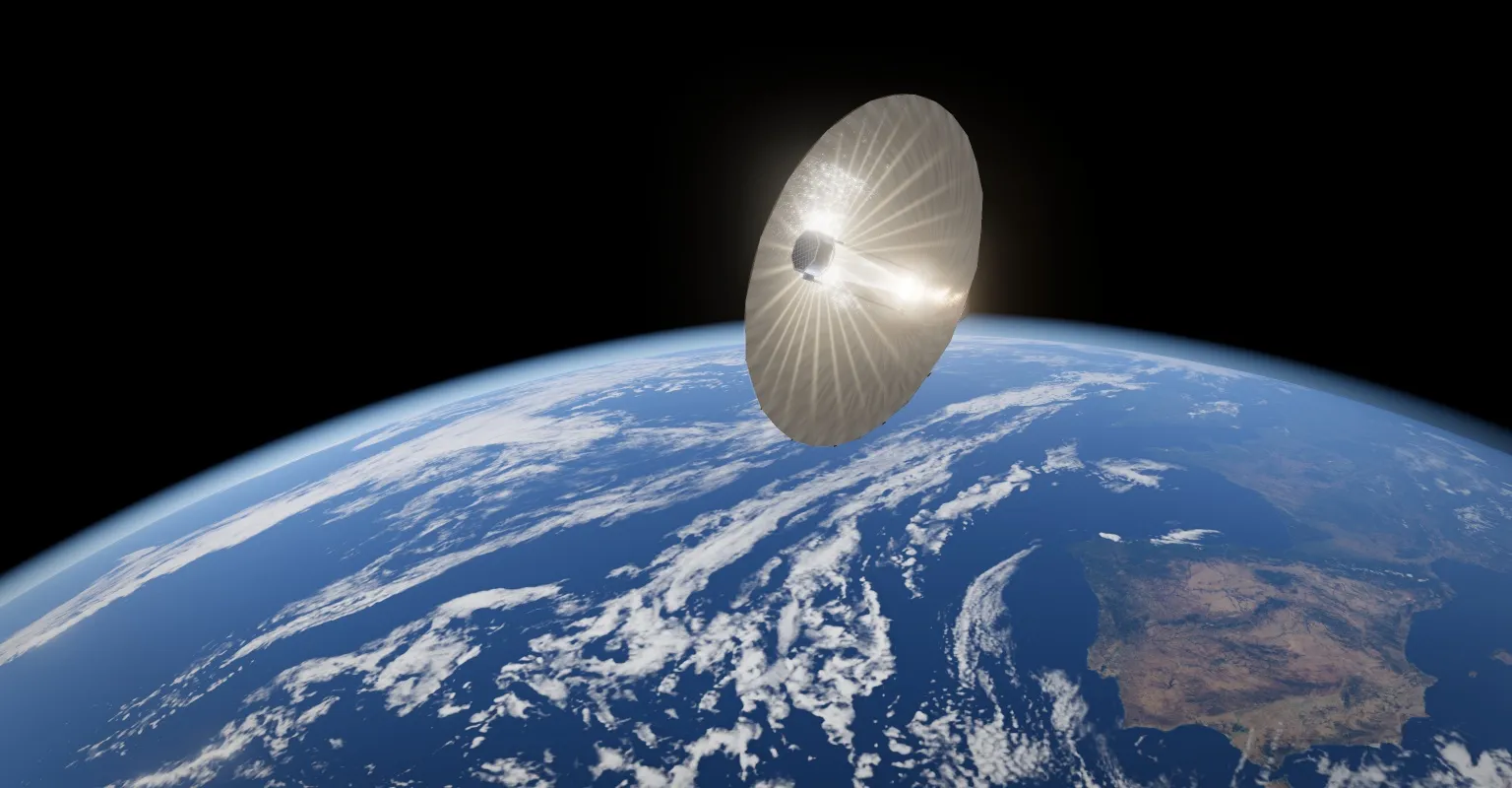
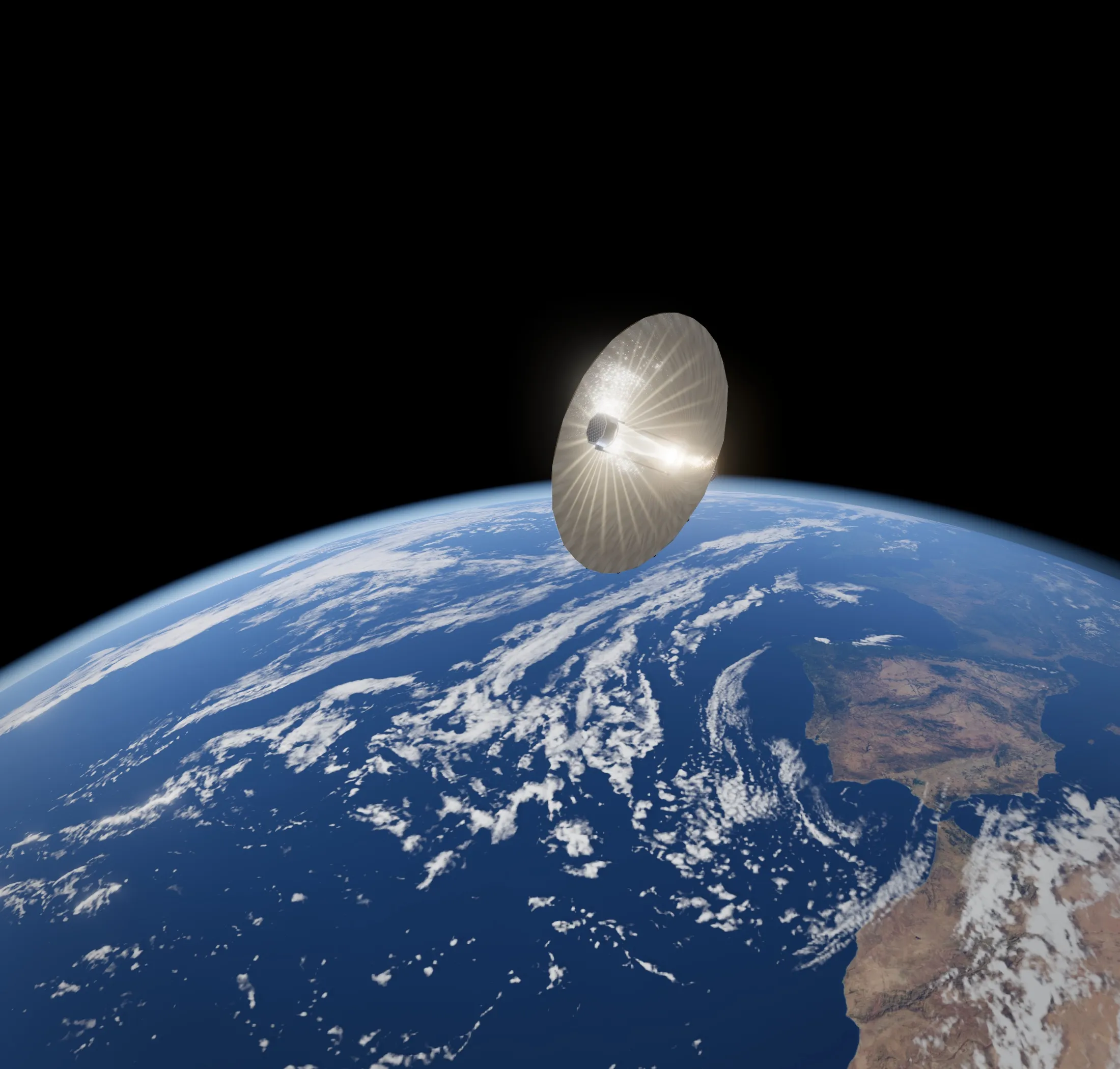
Rendered concept: in orbit above Earth, the unfolded concentrator faces the Sun, and the paths of the light converge on its secondary reflector.
01 / 1010

We make high-temperature in-space manufacturing commercially viable

Optically heated manufacturing in orbit and on the Moon.

The challenge02 / 1010

Power & cost bottleneck

  1. Proven quality

    Decades of experiments on the Space Shuttle and the ISS prove higher quality in microgravity.

  2. Cost and power held it back

    The unit cost of this higher quality was too high, due to high costs and limited power supplies.

1981Space Shuttle era starts2023Commercial manufacturing2000ISS starts operating1985Spacelab 3: crystal growth1992US Microgravity Laboratory2009NASA and ESA furnace rack2015JAXA levitation furnace2024First Varda return
  1. 1981Space Shuttle era starts
  2. 1985Spacelab 3: crystal growth
  3. 1992US Microgravity Laboratory
  4. 2000ISS starts operating
  5. 2009NASA and ESA furnace rack
  6. 2015JAXA levitation furnace
  7. 2023Commercial manufacturing
  8. 2024First Varda return

Why now03 / 1010

The gate is opening.

Starsmith is a platform for high-temperature manufacturing in space.

  1. Launch

    Launch costs keep shrinking, led by SpaceX.

  2. Process

    We use the Sun directly as a heat source, without conversion to electricity. We cut the cost of process heat 6 to 7.5 times.

  3. Re-entry

    Technology and regulation advance, led by Varda.

LAUNCH COST / KG$100k$10019802040

Our edge04 / 1010

6 to 7.5 times cheaper heat

Power system cost against silicon arrays.

Rendered concept: above Earth, the unfolded concentrator faces the Sun, and the paths of the light converge on its secondary reflector.
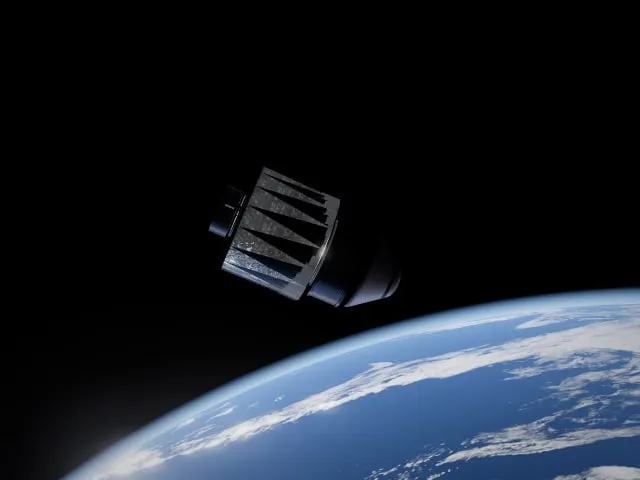
The spacecraft in orbit, its mirror wrapped around the hub, the payload module and re-entry capsule behind.
Stowed
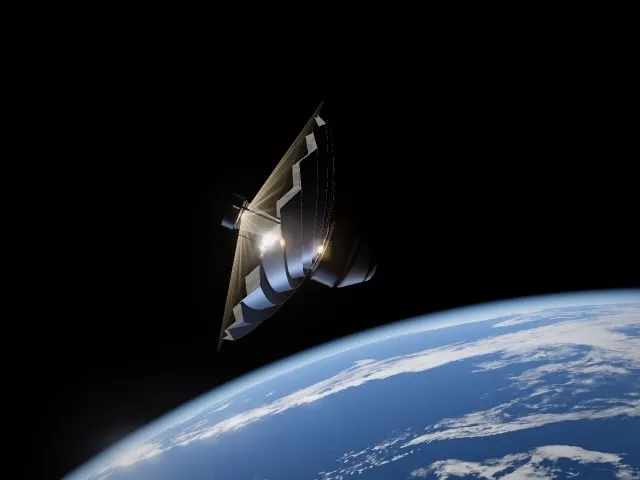
The mirror unwinding into a dish, facing the Sun.
Unfolding
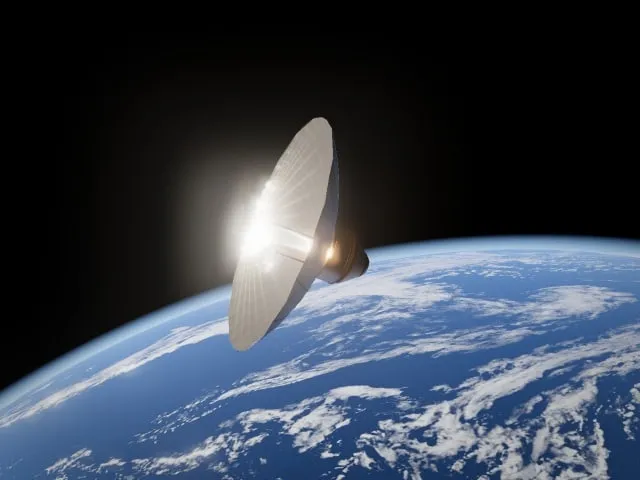
The open dish facing the Sun, focusing sunlight onto its secondary reflector.
Focusing sunlight

Our concentrator technology is based on research by the Morphing Space Structures Lab (MSSL) at Stanford University.

  1. 3×

    Efficiency

    Solar arrays turn about 20% of sunlight into heat. Our optics deliver about 60% to the furnace, net of re-radiation.

  2. 5×

    Light and compact

    Folded film stows in formats arrays cannot reach, at about a fifth of the mass of silicon arrays.

  3. Scalable

    Up to 20 m

    No scaling obstacle below 20 m: a 17.6 m mirror delivers 200 kW at 2,350 °C, where the gap widens to 7.4 to 9 times.

  4. Passive

    Less hardware

    Arrays are wired into the spacecraft’s bus. Our mirror is just film: no cells, no electronics, no rare earths.

Use cases05 / 1010

Materials gravity holds back.

Our platform, their process: we host seed growth processes that our partners can grow further terrestrially, multiplying the advances and profits coming from microgravity quality.

In orbit

Power semiconductors

Ga₂O₃, AlN

Grown at 1,800 to 2,300 °C, limited by crucibles and seed size.
Detector crystals

CdTe, CdZnTe, CdZnTeSe

Shuttle samples: 20 to 200 times fewer dislocations.

Laser crystals

Ti:sapphire

Convection spreads dopants unevenly, capping crystal size.

On the Moon

Lunar resources

Silicon and metals refined from lunar soil, instead of launched from Earth.

Market06 / 1010

A $15B a year market by 2050.

Addressable market, $B a yearOrbitMoonCombined$0B$2B$4B$6B$8B$10B$12B$14B$16B202620302035204020452050$2.5B$5.7B$4.4B$1.3B$14.7B$9.4B$5.3B$0202620302035Moon from 2028$170M today$610M
$170M today; the Moon from 2028.
  1. Orbit

    The space-grown part of a $27B terrestrial crystal market by 2050: AlN, Ga₂O₃, detector and laser crystals.

    Our share by 2050: $1.6B of crystals from our seeds, of which we earn 10%.

  2. Moon

    Resources, production, power and construction, growing with NASA’s Moon Base plan. The alternative is launching it, at $200,000 to 1M per kg.

    PwC’s low case, $93.9B over 2026 to 2050. Our 15% share: $1.4B a year by 2050.

Landscape07 / 1010

Everyone else heats with electricity.

Crystal growerscustomers / collaboratorsStationscollaboratorsFree flyerscompetitorsEnd to endcompetitorsConcentrated sunlightElectricity
Concentrated sunlight: Free flyers

Starsmith

  • Optically heated free flyer
Electricity: Crystal growers (customers / collaborators)

Terrestrial

  • Industry: Nitride Global, NextGEO, Tateho, MTI, Smelters
  • R&D institutions: IKZ, Max Born Institute, Fraunhofer

In space

  • Astral Materials LOI
  • United Semiconductors
Electricity: Stations (collaborators)
  • Axiom
  • Vast
  • Voyager (Starlab)
  • Blue Origin (Orbital Reef)
Electricity: Free flyers (competitors)
  • SpaceX Starfall
  • Varda
  • Rocket Lab (Photon)
  • The Exploration Company
  • Outpost Space
Electricity: End to end (competitors)
  • Space Forge
  • Besxar

Strategic roadmap08 / 1010

Orbit first. Then the Moon.

  1. Ground demo

    Opening of the concentrator, furnace process demos.

  2. Cubesat demo

    A deployable concentrator and a first melt in orbit.

  3. In parallel: demo furnace development in Hungary with the University of Miskolc.

  4. Microsat demo

    A bigger concentrator on a boom and the first furnace processes.

  5. First collaboration with re-entry

    The first crystals grown in orbit come home.

  6. Production in orbit

    Hosting partners’ high-temperature processes.

  7. The lunar surface

    Silicon and aluminium from regolith.

2027 Q32028 Q12028 Q32029 Q12029+2031+

Team09 / 1010

Built by engineers.

Ink drawing of Tamás Kotán

Tamás Kotán

Founder & CEO

Electrical engineer. Deep-tech expertise from multiple projects, one supervised by a Nobel laureate.

Ink drawing of Massimo Piazza

Massimo Piazza

Co-founder & CTO

Space engineer. 6+ years in the industry, worked on SpaceX launch campaigns.

Ink drawing of Jason Schmitt

Jason Schmitt

Advisor / VP R&D, Nitride Global

30 years in crystal growth. Designed a space furnace with Axiom Space and NASA.

Thank you10 / 1010

Contact

We are seeking

$3M to 5M

Be the first to help us reach space.

SF Bay AreaGermanyOptical development collaborationHungaryDemo collaborationUnited StatesAerospace development
  • United States, SF Bay AreaAerospace development
  • HungaryDemo collaboration
  • GermanyOptical development collaboration
Our activityR&D collaboration

Starsmith Space / San Francisco, California

Reach out

Tell us what you have in mind.

How we use your details: Privacy notice.

Email us instead

Unsaved message

Discard your message?

The information you entered will be lost.

Your information

Privacy notice

Updated

This notice explains how we handle personal information when you visit this website or contact us.

Privacy contact

For privacy questions or requests, email [email protected].

Information we use

Website visits. Our hosting and security providers process technical details such as your IP address, requested page, browser, device, referring page and time of access to deliver the website and prevent abuse. The website uses Cloudflare. Fonts, images and videos are served with the site.

Contact. We use your name, email address, selected reason and message to read and respond to your enquiry, including interest in joining the team. These fields are required to send the form. You can email us instead. Please include only information relevant to your enquiry.

Spam prevention. When you open the contact form or visit the contact page, hCaptcha, provided by Intuition Machines, Inc., processes IP, browser and device information, interactions and challenge responses to distinguish people from bots. See the hCaptcha privacy policy.

Why we use it

Where EU or UK data protection law applies, we rely on our legitimate interests in operating a secure website, preventing spam and responding to enquiries (Article 6(1)(f) GDPR). If you ask us to take steps towards a contract with you, we rely on Article 6(1)(b) for those steps. We may also retain information to meet legal obligations (Article 6(1)(c)).

Who receives it

The founding team and service providers needed to host and secure the website, process enquiries and deliver email receive the relevant information. Form submissions go through Web3Forms (Web3Creative) to our mailbox. Its infrastructure and spam-filtering providers may also process submission data, including your IP and email address. We may disclose information when legally required.

We do not sell personal information or share it for targeted advertising. Social profile links take you to external websites, whose privacy notices apply when you visit them.

Cookies and browser storage

We use no advertising or analytics tools. Our own code sets no cookies and does not save form drafts in browser storage. Hosting, security and hCaptcha services may use cookies or similar storage to operate and prevent abuse. Your browser can block or clear these, which may affect verification. You can still email us. We do not change this behaviour in response to Do Not Track signals.

Retention and international transfers

We keep correspondence while needed to handle your enquiry and any resulting relationship, or to meet legal obligations or resolve disputes. Web3Forms states that it keeps submissions for up to three years unless deleted sooner. Technical and verification records follow the providers’ retention policies linked above.

We and our providers may process information in the United States, India and other countries. For transfers from the EEA or UK, providers’ terms set out safeguards such as standard contractual clauses or, where applicable, the Data Privacy Framework. Contact us for details or a copy of the relevant safeguards.

Your rights

Depending on the law that applies, you may request access, correction, deletion, restriction or portability of your information, and object to processing based on legitimate interests. Email [email protected] to make a request. You may also complain to your local data protection authority.

Spam checks may block a form submission. We do not make decisions about you with legal or similarly significant effects using automated processing.